

5 Traffic Control Device Mistakes California Contractors Make(And How To Avoid Them)
Selecting the right California traffic control devices is not just a matter of convenience—it’s a legal obligation tied to worker safety, public travel protection, and compliance with state and federal standards. The California Manual on Uniform Traffic Control Devices (CA MUTCD), developed in coordination with the Federal Highway Administration, outlines the official traffic control devices, traffic signs, traffic control signals, and road markings required for highways, streets, pedestrian and bicycle facilities across California.
Yet, even with clear regulations prescribing uniform standards and specifications, contractors still make mistakes that can lead to project delays, citations, or liability. We help contractors avoid these pitfalls every day by supplying fully compliant traffic control devices and offering guidance rooted in real-world traffic engineering, safety programs, and California Department of Transportation requirements.
If you want to see what compliant devices look like, browse our full lineup.
Below are the five most common mistakes contractors make and how to avoid them.
1. Using Non-MUTCD-Approved or Outdated Devices
One of the biggest mistakes contractors make is using unofficial or outdated equipment. The Manual on Uniform Traffic Control Devices, including the national MUTCD and the California MUTCD, is updated periodically to reflect new safety technologies, major changes in design criteria, and national standards from the Federal Register Notice and Final Rule adopting updated specifications.
Using non-approved equipment means:
- Your signage may not meet uniform standards
- You may violate California Vehicle Code Section provisions
- Local agencies may reject your traffic plans
- You risk citations, rework, or liability
California requires substantial conformance with the national edition of the MUTCD, and the CA-specific version includes additional rules for bicycle facilities, pedestrian accommodations, flashing signals, stop signs, and roadway markings.
How to Avoid It:
Always verify that your signs, barricades, cones, and control devices conform to the current CA MUTCD. Every product we offer meets the legal state standard and follows the most recent edition, phased release updates, and policy revisions.
2. Not Planning for Nighttime Visibility
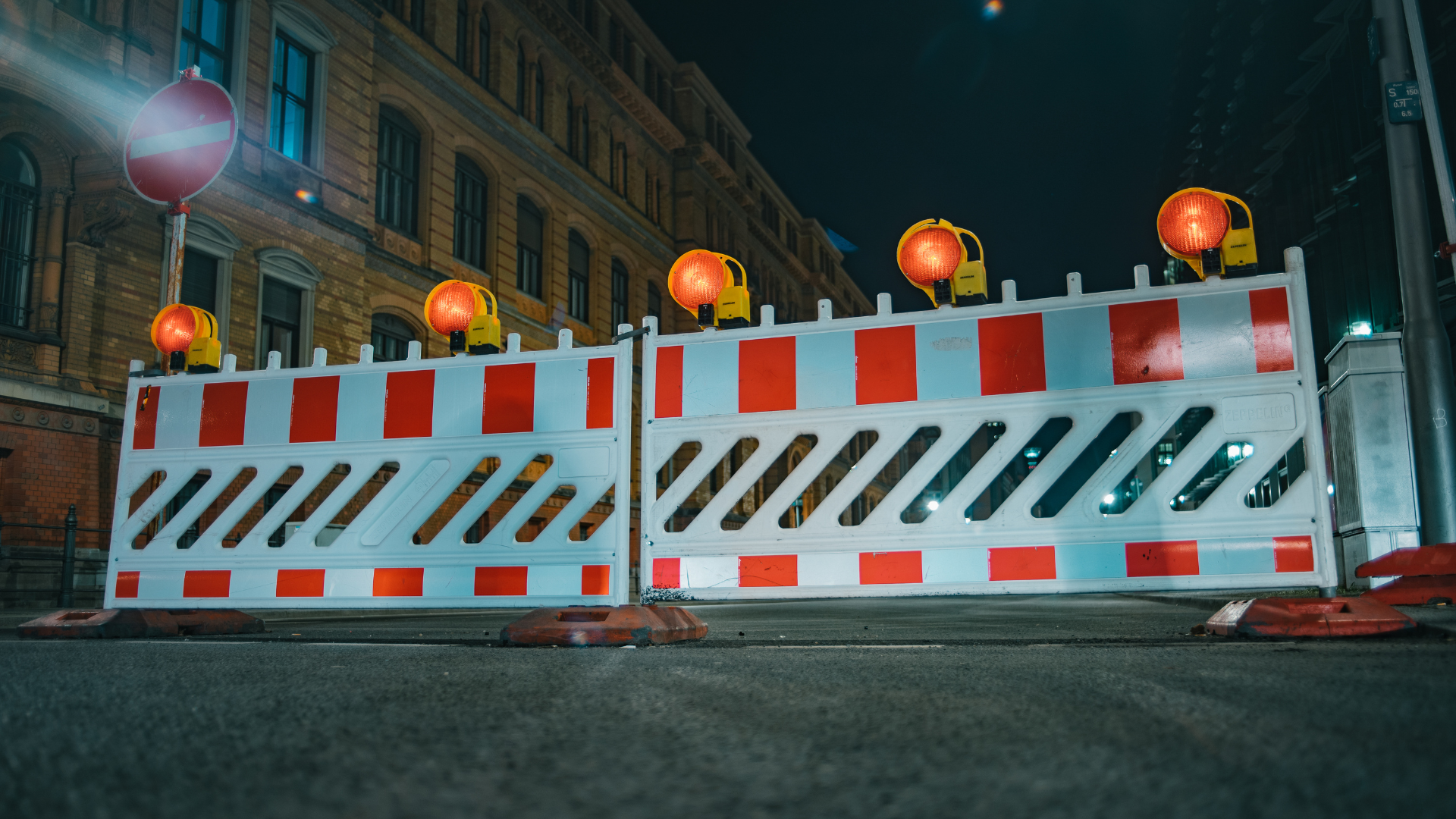
Another major oversight is neglecting nighttime conditions when selecting traffic control tools. California’s transportation and roadway environment requires a higher standard of nighttime visibility due to high-speed highways, dense urban zones, and frequent maintenance operations during off-peak hours.
Failing to plan for nighttime visibility can result in:
- Drivers failing to perceive tapers or lane shifts
- Increased risk of collisions
- Unsafe site roadways and reduced worker protection
The CA MUTCD provides a detailed discussion on reflectivity levels, retroreflective sheeting grades, flashing signals, and illumination requirements for highway signs.
How to Avoid It:
Choose traffic control devices with high-grade retroreflective material, compliant warning traffic signs, and optional lighting for night work. Our catalog includes cones, barricades, and sign design details suited for both day and night visibility. All of which ensure that site roadways remain open and safe under all conditions.
3. Choosing the Wrong Barricade Type
Not all barricades are equal, and choosing the wrong one is a frequent problem in road management. Road managers nationwide must determine which barricade matches the needed traffic management techniques, pedestrian access requirements, and roadway conditions.
Common mistakes include:
- Using Type I barricades when Type III is required
- Misunderstanding acceptable use of delineators
- Selecting barricades that don’t meet weight or stability rules
The CA MUTCD defines the exact specifications for barricades, their stripes, dimensions, and proper use.
How to Avoid It:
Match your barricade to the level of roadway closure or restriction. California Traffic Safety provides devices that meet uniform standards and specifications and we can help contractors determine the correct barricade type for their project.
4. Poor Spacing or Incorrect Taper Design
Even when contractors select the correct devices, many fail to follow required spacing, taper length, or proper device placement. These layout mistakes often violate California manual requirements and create confusion for drivers.
Common errors include:
- Tapers that are too short
- Inadequate buffer zones
- Not enough devices to warn traffic
Traffic engineering guidelines in the CA MUTCD specify spacing based on traffic speed, work zone type, and roadway geometry.
How to Avoid It:
Use the spacing charts in the California Manual on Uniform Traffic Control Devices and never guess. Proper layout ensures drivers have enough time to react, which significantly increases safety. If you’re unsure how to design a taper, our team can assist and supply the required official traffic control devices.
5. Ignoring California-Specific Requirements

California has additional rules beyond the national MUTCD, especially involving pedestrian and bicycle facilities, construction on public travel routes, and local agency permitting. Contractors who rely solely on the national manual often overlook essential CA-specific rules.
Examples include:
- Special signage for bicycles
- Requirements for pedestrian detours
- Local city or county-specific provisions
- Additional CA MUTCD diagrams and final dispositions
Ignoring these can result in rejected plans, job shutdowns, or non-compliance notices pursuant to state regulations.
How to Avoid It:
Always cross-reference the CA MUTCD and local regulations. When purchasing devices, choose a supplier that understands California traffic control standards, not just national standards. California Traffic Safety ensures every device meets state rules under the traffic control devices committee (CTCDC) and Department of Transportation oversight.
Protect Your Project With the Right California Traffic Control Devices
Avoiding these common mistakes ensures compliance, improves safety, and keeps your project running smoothly. Whether you need traffic signs, traffic signals, road markings, barricades, or specialized devices for pedestrian and bicycle facilities, California Traffic Safety provides equipment that aligns with national and California-specific rules.
Browse compliant, ready-to-deploy equipment or call California Traffic Safety for more information!