

Managing traffic in work zones can be challenging, especially in California where roadways are busy and construction projects are frequent. Intelligent work zone systems California agencies and contractors rely on offer a solution to improve safety, inform motorists, and maintain traffic flow. Two popular options from California Traffic Safety are the QMS1000 and QMS2000. Both systems are designed to provide real-time traffic information, but each has unique features that make it suitable for different types of projects.
Understanding Intelligent Work Zone Systems
Intelligent work zone systems California offers are part of the broader category of intelligent transportation systems. These systems are designed to monitor traffic, display dynamic messages, and enhance mobility in work zones. By providing real-time information about congestion, travel time, and incidents, these systems help reduce crashes and improve overall safety for drivers, pedestrians, and construction teams.
California Traffic Safety’s queue monitoring systems are especially useful for work zones that change daily, weekly, or monthly. Instead of relying solely on traditional traffic signs, these intelligent systems provide automated alerts and messages that respond to the current speed and density of vehicles approaching a work zone. This ensures that motorists receive accurate, timely information, which helps maintain traffic flow and reduces the likelihood of congestion or collisions.
QMS1000: Reliable and Simple

The QMS1000 is ideal for projects that require a single portable changeable message sign (PCMS) and one trailer-mounted arrow board. Both the PCMS and arrow board come equipped with radar systems and a modem, allowing the system to monitor traffic approaching an active work zone.
The QMS1000 operates by detecting changes in vehicle speed. If traffic is flowing at a normal pace, the PCMS will display messages like ROAD WORK AHEAD. If speeds decrease below a certain threshold, the sign updates automatically to SLOW TRAFFIC AHEAD. In cases where traffic comes to a complete stop, the PCMS will display STOPPED TRAFFIC AHEAD.
Additionally, the system can send automated text alerts to traffic control personnel or a traffic management center, allowing them to respond quickly to incidents. This real-time information ensures compliance with operating procedures, enhances safety, and provides drivers with the guidance needed to navigate work zones efficiently.
QMS2000: Advanced and Flexible
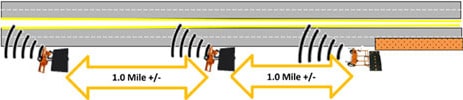
For projects that require more complex monitoring and communication, the QMS2000 offers additional capabilities. This system includes an extra PCMS and modem, allowing for multiple messages to be displayed simultaneously. For example, the first PCMS might show STOPPED TRAFFIC AHEAD while the second displays PREPARE TO STOP. The radar system mounted to one of the PCMS units can provide real-time travel time estimates, helping motorists anticipate delays.
The QMS2000 is designed for larger or more dynamic work zones where multiple road segments must be monitored. Additional message boards or arrow boards can be incorporated as needed, providing a scalable solution for traffic flow management. The system can be integrated into broader intelligent transportation systems, offering temporary replacements for permanent sensors or CMS devices when necessary.
Both systems are straightforward to deploy. With pre-programmed messages and intuitive controls, they can be implemented quickly, reducing setup time and ensuring compliance with operating procedures and safety standards. California contractors can develop deployment plans that align with project schedules, funding, and specific roadway conditions, making intelligent work zone systems a practical and effective investment.
Key Considerations for Choosing Between QMS1000 and QMS2000
When deciding between the QMS1000 and QMS2000, project managers should evaluate the following:
- Project Size: Smaller work zones with limited traffic may only require the QMS1000, while larger or multi-lane projects benefit from the QMS2000.
- Traffic Volume: High-density traffic areas may require multiple message boards to communicate effectively with motorists.
- Real-Time Information: If providing real-time travel time or queue information is critical, the QMS2000’s additional PCMS offers more flexibility.
- Integration with ITS: Projects that are part of intelligent transportation systems can benefit from the QMS2000’s ability to interface with traffic responsive systems.
- Budget and Resources: Both systems are cost-effective, but the QMS2000 may require additional hardware and deployment planning.
By assessing these factors, municipalities, contractors, and facility managers can select the system that best meets their safety, mobility, and traffic flow objectives.
Benefits of Intelligent Work Zone Systems
Implementing intelligent work zone systems offers several advantages beyond real-time messaging:
- Improved safety for drivers, pedestrians, and construction crews.
- Reduced congestion and more predictable traffic flow.
- Ability to monitor multiple road segments simultaneously.
- Automated reporting and alerts for incidents or stopped traffic.
- Compliance with national traffic control standards and best practices.
Intelligent queue monitoring systems like the QMS1000 and QMS2000 also provide valuable data for traffic studies and future project planning. According to the Federal Highway Administration, real-time traffic information can reduce travel delays and improve operational efficiency in work zones (source: FHWA).
Making the Right Choice for Your Work Zone
Whether you choose the QMS1000 or the QMS2000, intelligent work zone systems California relies on offer a reliable, flexible, and scalable solution for improving work zone safety and traffic management. The QMS1000 is ideal for straightforward projects requiring one PCMS and arrow board, while the QMS2000 provides expanded capabilities for larger or more complex operations.
By integrating these systems into deployment plans and intelligent transportation systems, California contractors and municipalities can enhance safety, maintain traffic flow, and provide motorists with accurate, real-time information. Intelligent work zone systems not only address current traffic challenges but also support long-term operational efficiency, compliance, and mobility on busy roadways.
To learn more about QMS1000 and QMS2000 intelligent work zone systems or to request a consultation for your next project, contact California Traffic Safety today. Their team can help design a solution that fits your project, traffic conditions, and safety requirements.